


ART THERAPY FOR TEENS
Providing art therapy for teens in Gaithersburg, Maryland, who are navigating grief, loss, anxiety, depression, trauma, emotional overwhelm, identity development, and major life transitions.
When words are not enough, support is still possible.
Supporting Teens Through Grief, Anxiety, Depression, and Life Transitions
When Everything Feels Different
The teen years already come with significant change, growth, and challenges. It’s a lot to live with, and it’s exhausting between friends, family, and leaving childhood behind. When grief, loss, trauma, anxiety, depression, or major life transitions are added to the mix, it can feel overwhelming.
The teen years bring significant emotional, social, and developmental changes. Teens (ages 13–17) are often navigating:
Increasing responsibilities and accountability
Shifting relationships with friends, family, and peers
Questions of identity and self-understanding
Growing independence and agency
Academic pressures
Stressors in an already overwhelming world
For many teens, this stage can feel intense, uncertain, and emotionally exhausting.
Teens who have recently turned 18 may also be adjusting to early young adulthood while still benefiting from family support, guidance, and connection.
Sometimes everything feels like too much to hold. Art therapy offers a space for emotional expression, reflection, and support when life feels overwhelming, confusing, or intense. School, friendships, family, and even your sense of self can start to feel distant or heavy. Things that used to matter may no longer feel important. You might feel tired, numb, angry, shut down, or disconnected.
You may be going through the motions while feeling like no one truly sees or understands what you’re carrying, and a part of you wants relief. A part that wants to feel understood again. A part that wants things to feel less overwhelming.
You do not need to have the right words here. You do not need to explain everything perfectly or perform feeling “okay”.
How Art Therapy Supports Teens
Creative Expression as Identity Work & Self-Understanding
Art therapy offers another way forward through creativity, imagery, and conversation at your own pace. It provides space to slow down, express what is happening internally, and build emotional clarity and resilience while developing a deeper understanding of your life experiences and transition into adulthood.
There is no pressure to perform, fix yourself, or be “good at art.” Just a space where you can show up as you are, even when things feel unclear or overwhelming.
Over time, this can help you begin to make sense of what has changed, what you are carrying, and what you may need next.
Teens often experience emotions that feel too complex, overwhelming, or confusing to put into words. Art therapy offers a space where emotional processing and identity development can unfold together, without pressure or judgment.
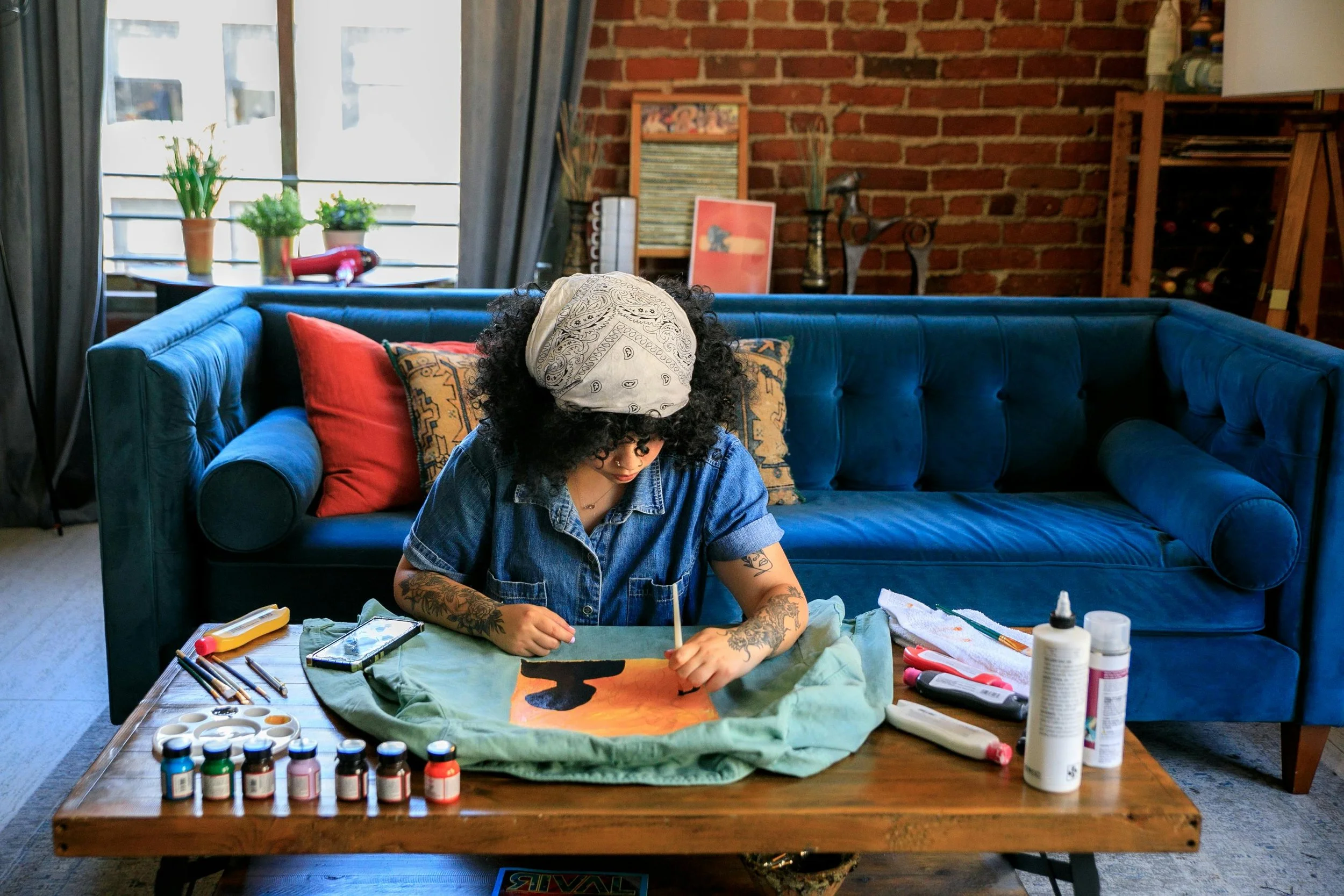
Sessions may include drawing, painting, clay, collage, and other expressive materials, as well as sketchbook prompts, reflective writing, and journaling. Creative expression helps give shape to emotions that feel unclear, heavy, or disconnected.
Creative expression, supported by calm conversation, helps teens build:
Emotional awareness
Coping skills
Self-understanding
Emotional regulation
Identity development
Art therapy is never about artistic skill or creating “good” artwork. It is about expression, meaning-making, and emotional support.
When Life Feels Heavier
When grief, trauma, anxiety, depression, or major life transitions are part of the experience, everything can feel even heavier.
Learn more about Art Therapy for Grief and Lossif your teen is navigating bereavement, a significant loss, or major life changes.
Teens may:
Withdraw or shut down emotionally
Become more irritable or reactive
Feel disconnected from friends, family, school, or themselves
Lose motivation
Experience friendship changes or loneliness
Feel misunderstood or unseen
These experiences often reflect a deeper need for safety, understanding, and a place to be real without judgment or pressure.
Why Teens Struggle to Talk About It
Many teens may not feel comfortable talking about what they are experiencing, or they may not have the words to express it yet. Some experiences may feel as though they need to remain unspoken, but they do not have to remain unsupported.
Art therapy provides a supportive, developmentally appropriate space to explore emotions, process difficult experiences, and express what feels hard to say out loud. Through creative expression and supportive conversation, teens can begin to understand what has changed, what they are carrying, and how to move forward in a way that feels more grounded and manageable.
New to art therapy? Learn more about What Is Art Therapy?and how creative expression supports emotional healing, identity development, and self-understanding.

Meet Your Teen’s Art Therapist
Hello, I am Lindsay Downs, a Licensed Clinical Professional Art Therapist and Board-Certified Art Therapist (LCPAT, ATR-BC®) with over 7 years of experience helping teens heal on their terms and at their pace.
I offer in-person art therapy for children, teens, and adults in Gaithersburg and Montgomery County, Maryland, and I specialize in grief and loss. My work supports teens navigating experiences that feel too heavy, overwhelming, or complex for words alone, helping them reconnect with themselves, build emotional safety, and move at a pace that feels right for them.
Learn more about my approach, philosophy, and professional qualifications.
What a Teen Art Therapy Session Looks Like
A safe space to express, create, and make sense of what you’re carrying. A typical art therapy session is flexible and shaped around what you need in that session.
A brief check-in about how things have been since the last session
Exploring what feels important, heavy, or present that day
Creative art-making using chosen materials
Exploration of emotions, thoughts, memories, or experiences through imagery or storytelling
Reflection and supportive conversation at a comfortable pace
Grounding before the session ends
Every teen is different. Some create right away. Others need time to build trust. There are many ways to engage and be supported.
Parent, Legal Guardian, & Caregiver Perspective
It is natural for teens to feel uncertain or hesitant when beginning art therapy. Over time, parents may notice subtle or gradual changes, such as greater emotional expression, stronger coping skills, increased self-awareness, more open communication at home or school, and meaningful shifts in mood, mindset, or perspective.
Nothing is forced. Teens are given the space, presence, and understanding they need as they grow into themselves and move toward adulthood. I consider the parent’s, legal guardian’s, or caregiver’s perspective and the teen’s individual experience. Although art therapy centers on the teen’s needs, care is collaborative. Each person’s voice is heard, and their perspective is approached with respect.
Collaboration With Parents, Legal Guardians, and Caregivers
Art therapy for teens may include collaboration while protecting the teen’s need for privacy and safety. Teens are offered privacy and confidentiality as a client, except for safety concerns such as self-harm, harm to others, or suicidal thoughts. The initial session for art therapy covers these topics more in-depth, and communication and expectations are reviewed so everyone feels informed and supported. I offer separate sessions apart from your teen’s sessions as well as joint family sessions when needed and discussed with your teen.
Collaboration may include:
General progress updates when clinically appropriate
Guidance for supporting your teen at home and school
Coping tools and communication strategies
Support around family stress or transitions
Family sessions may be offered when clinically appropriate. These sessions are discussed with the teen beforehand and planned collaboratively with everyone involved to make the experience as supportive and beneficial as possible.
The goal with joint family collaboration is to support your teen while also helping you support them outside of art therapy.
Schedule a Teen Art Therapy Consultation
If your teen is struggling with grief, anxiety, depression, emotional overwhelm, or a major life transition, support is available.
You do not have to figure this out alone—and your teen does not have to either.
A free 20-minute consultation is a space to ask questions, share concerns, and see whether art therapy feels like a good fit.


FAQs
-
Art therapy may support teens experiencing:
Grief and bereavement, including the death of a loved one, beloved pet, or service animal
Complicated, prolonged, or cumulative grief
Anxiety, sadness, or emotional distress related to loss, change, or uncertainty
Emotional overwhelm, frequent meltdowns, or difficulty regulating emotions
Trauma, stressful experiences, or feelings of unsafety
Family stress, divorce, separation, blended family adjustments, or other changes at home
Major life transitions, including moving, changing schools, or adjusting to a new community
Identity development, self-esteem concerns, and growing self-awareness
Struggles with self-worth, confidence, or feeling “different” from peers
Difficulty expressing thoughts, feelings, or needs verbally
Challenges with peer relationships, friendships, and social connection
Art therapy supports teens by helping them:
Express emotions they cannot yet put into words
Process grief, loss, trauma, anxiety, or big life changes
Build emotional awareness and regulation skills
Feel understood in a different, nonverbal way
Develop healthy coping strategies over time
Many teens experience relief simply from having a space where they can show up as they are. A space where they do not have to perform, fit in, have everything figured out, or find the perfect words. A space to express themselves authentically, feel understood, and experience a sense of belonging while navigating life's challenges.
-
A typical art therapy session may include:
A gentle check-in about how your teen has been feeling and what has been happening since the last session
Depending on their needs, we may begin with an art therapy prompt or directive connected to previous work, treatment goals, or current concerns
Many teens choose to continue an ongoing art project or begin with what feels most important to them that day
Creative art-making using a variety of materials, such as drawing, painting, collage, clay, mixed media, and sensory-based approaches such as sand tray work, toy-based expression, and narrative play
Structured yet flexible support to encourage emotional expression, self-awareness, coping skills, and progress toward therapeutic goals
Exploration of emotions, thoughts, memories, and experiences through imagery, symbolism, storytelling, and play
Supportive reflection and conversation at a pace that feels comfortable and developmental appropriate
Final words and closing rituals at the end of a session and clean up. I may offer a sketchbook prompt for outside of sessions for reflection and journaling.
Every teen brings their own personality, strengths, experiences, and comfort level into the therapy space. Some teens jump right in, while others take time to build trust and get comfortable.
Both are okay!
Art therapy is designed to meet teens where they are emotionally, developmentally, and creatively. The goal is not to change who they are, but to provide a space where they can feel safe enough to express themselves, explore what they are carrying, and experience a sense of understanding and belonging without pressure, judgment, or expectations to perform.
-
Why choose art therapy instead of traditional talk therapy?
While talk therapy relies primarily on conversation, art therapy integrates art making and creative expression as part of the therapeutic process.
Many teens experience emotions, thoughts, and life experiences that feel difficult to explain, confusing to sort through, or simply too overwhelming to put into words. Art therapy offers another way to explore and express what is happening internally without relying solely on talking.
Through drawing, painting, collage, clay, journaling, mixed media, and other creative processes, teens can communicate thoughts, emotions, and experiences in ways that often feel more natural, authentic, and accessible. Creative expression can help give shape to feelings that feel unclear, disconnected, or difficult to verbalize.
Art therapy is not about artistic skill or creating "good" artwork. It is about creating a safe space for self-expression, self-discovery, emotional processing, and identity development. Art therapy offers many teens a way to feel understood, explore who they are, and express what they are carrying without pressure to have all the answers or find the perfect words.
-
Teens are navigating a period of significant emotional, social, and personal growth.
Questions about identity, belonging, relationships, independence, and the future often emerge during adolescence, while grief, anxiety, depression, trauma, or major life changes can make these experiences feel even more overwhelming.
Art therapy provides an alternative to relying solely on conversation. Through creativity, imagery, symbolism, and reflective dialogue, teens can explore emotions, experiences, and parts of themselves that may feel difficult to explain or fully understand. Creative expression often creates access to thoughts and feelings that can be challenging to put into words.
Art therapy offers many teens a space to slow down, make sense of what they are carrying, develop greater self-awareness, and express themselves authentically without pressure, judgment, or expectations to have everything figured out.
-
Working with me is a collaborative and supportive process focused on helping teens feel safe, understood, and accepted for who they are.
Art therapy is not about fixing you, rushing you, or expecting you to have everything figured out. It is about creating space to explore what you are experiencing at a pace that feels comfortable and manageable.
Sessions are guided by your emotional readiness and may include both creative expression and conversation, depending on what feels most helpful in the moment. Some teens enjoy talking while they create. Others express themselves more through imagery, art-making, writing, symbolism, or reflection before finding words for their experiences. Both approaches are welcome.
Art therapy sessions may include drawing, painting, collage, clay, mixed media, sketchbooks, journaling, creative prompts, and reflective conversation. There is no pressure to be artistic or create "good" artwork. The focus is on expression, self-understanding, emotional awareness, and discovering what feels true and meaningful to you.
My role as an art therapist is to support teens navigating grief, anxiety, depression, trauma, emotional overwhelm, identity development, and life transitions while helping them build emotional resilience, coping skills, self-awareness, and a stronger sense of connection to themselves and others over time.
-
You are welcome to schedule a complimentary 20-minute consultation by email or phone to explore whether The 3 Brushes may be a good fit for your teen.
The consultation is a no-pressure opportunity to ask questions, share your concerns, and discuss what support you are seeking for your teen. Following your inquiry, I will provide available consultation times and next steps.
If calling, please leave your name, phone number, reason for reaching out, and the best times to contact you. I generally respond within 1–2 business days, typically during late morning and early afternoon hours